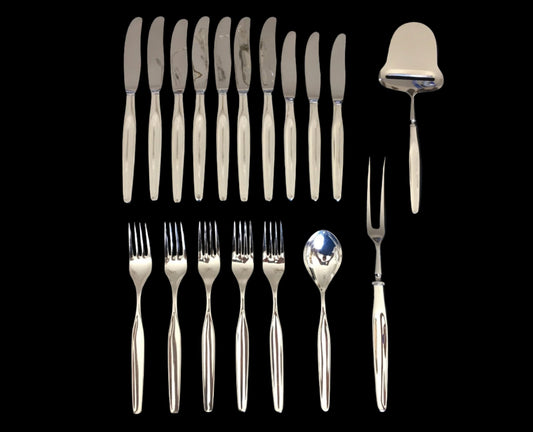
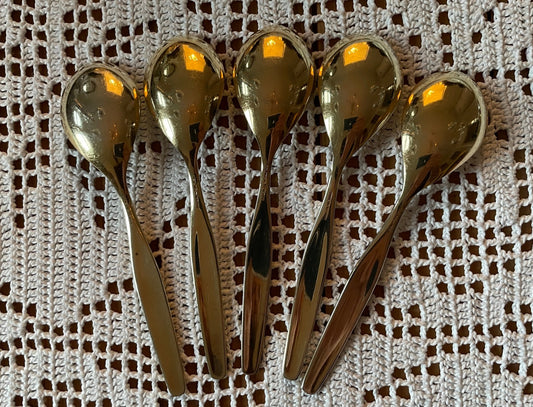
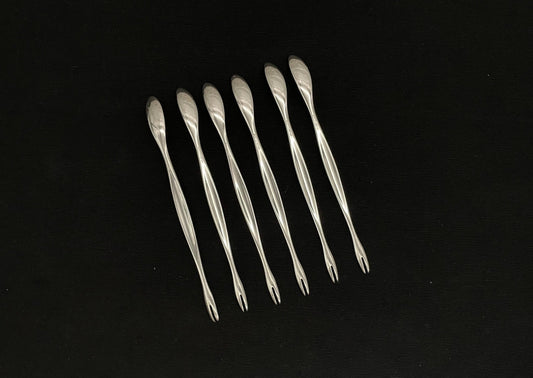
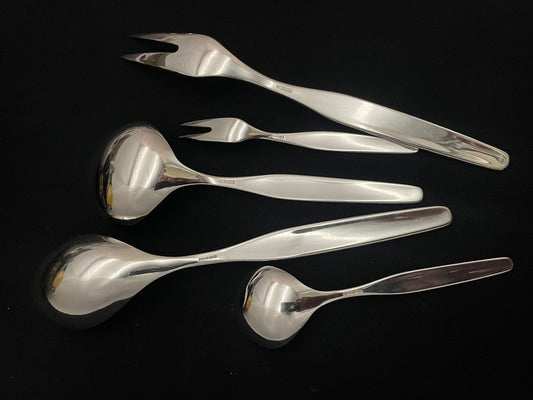
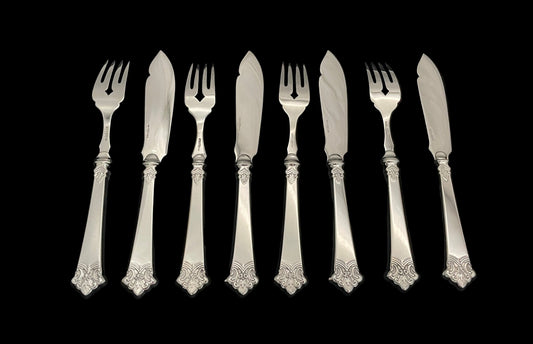
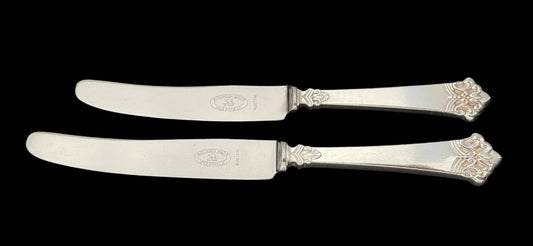
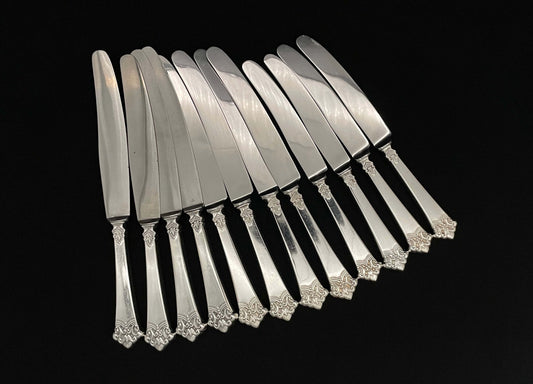
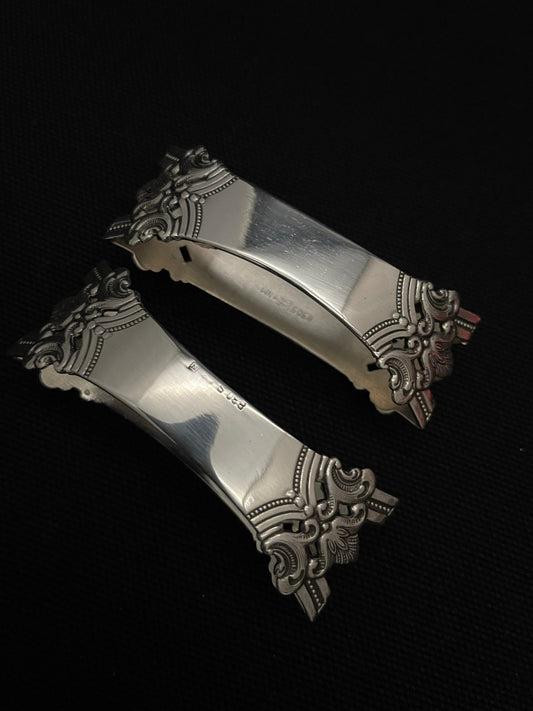
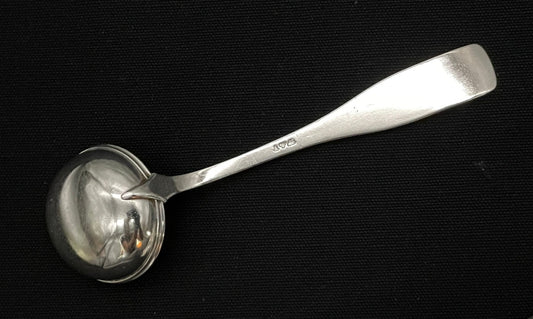
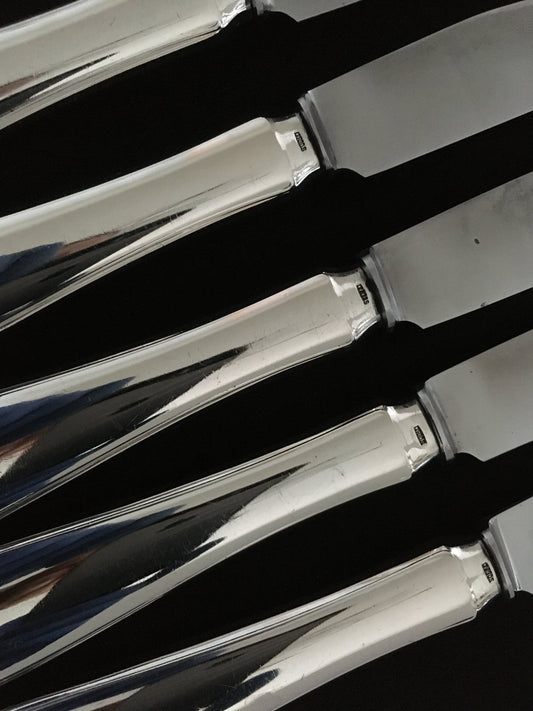
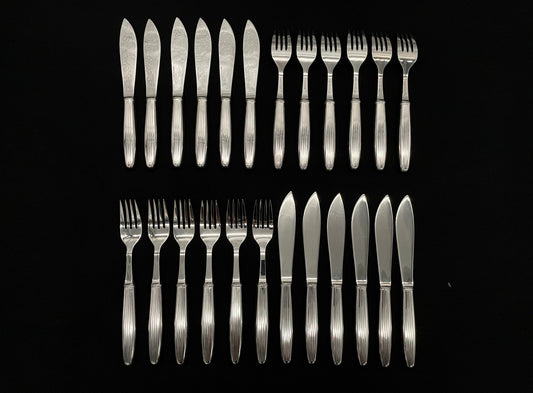
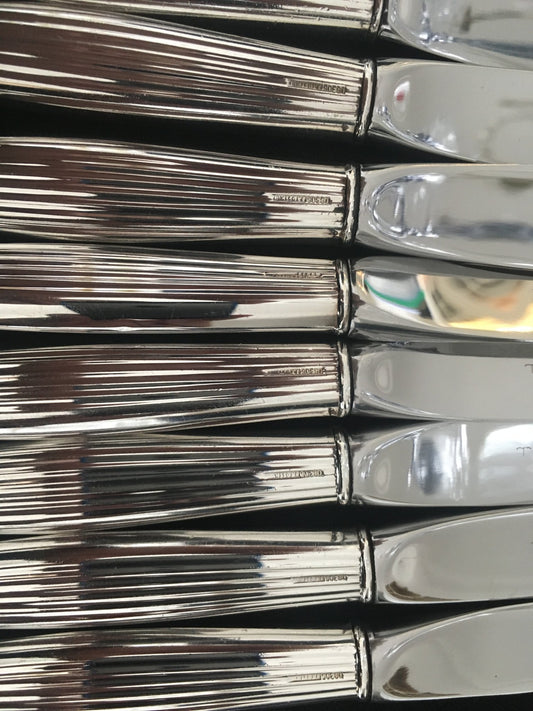
We carry the most common patterns such as:
Anitra, Arvesølv, Banquet, Dragon, Noble, Elisabeth, Flat Rose, Jubilee, Lilje, Lillemor, Märtha (Martha), Månesølv, Odel, Oseberg, Prins Harald, Opphøjd Rose, Pariser, Fluted, Rosendal, Rådhus med fan, Tele, Tradisjon, Valdres, Åre and Aase.
We also have some of the rarer patterns such as: Shell, Clam, Bergens Fluted, Baroque, Various Farmer Rococo, Various Bridal Silver, Bridal Crown, Diplomat, Double Pressed Dragon, Double Fluted, Dovre, Queen's Pattern, Squirrel, Remembrance, Various Shapes, First Lady, Hammered, Hammered Shell, Hardanger, Ibis, Iris, Lily of the Valley, Crown, Kristiania, Laila, Kings Pattern, Commemorative Silver, Myrtle, National Rococo, Nina, Norrøna, Olav's Rose, Oslo, Polar, Princess, Queens Pattern, Ragnhild, Renaissance, Riks, Rococo, Romanesque, Town Hall Smooth and Town Hall with Table, Saga, Silvia, Castle Silver, Parish Pattern, Pointed Engraving, Table, Victoria and Østerdal.
If there is another pattern you would like parts for, we can be helpful in trying to obtain this.
Goods must be prepaid via online banking and are shipped with tracking from the post office. You will be notified when the goods are on their way.
Discounts are given on purchases of multiple products. Purchase over Kr 4000,- to get 10%